
Most business owners think about cybersecurity the same way they think about insurance—something to sort out once things settle down. But in business, things rarely settle. And while you are focused on growing your team, closing deals, and keeping operations moving, the gaps in your IT security stay exactly where they are—wide open.
A single cyberattack can undo years of work. Not a bad quarter. Not a different client. One compromised email, one weak password, one unpatched server—and your entire operation can grind to a halt overnight.
What is a Cyberattack, and How Does it Affect a Business?
A cyberattack is any deliberate attempt by an external or internal threat actor to breach a company’s IT systems—with the goal of stealing data, disrupting operations, or demanding ransom. For businesses without strong IT security services in place, the impact goes far beyond a technical problem. Operations freeze, client data gets exposed, revenue stops, and recovery takes weeks—sometimes longer.
According to IBM’s Cost of a Data Breach Report, the global average cost of a breach now exceeds $4.8 million. For small and mid-sized businesses, even a fraction of the figure can be enough to force a shutdown. The damage isn’t always financial either—lost client trust is often harder to rebuild than any system.
Why Are Small and Mid-Sized Businesses Targeted More Than Large Corporations?
There are widespread assumptions that hackers go after big companies because that’s where the money is. That’s not how it works in practice. Small and mid-sized businesses have become the primary target precisely because they tend to have fewer defenses—not less value.
Most growing businesses direct their IT budget toward keeping things running: hardware, connectivity, and day-to-day support. IT security services often get deprioritized—not out of carelessness, but because there’s always something more urgent on the list. Cybercriminals know this. Automated tools scan thousands of business networks every hour, probing for outdated systems, open ports, and unprotected credentials. If a gap exists, it gets found. The size of the business rarely factors into it.
How Do Cyberattacks Actually Happen?
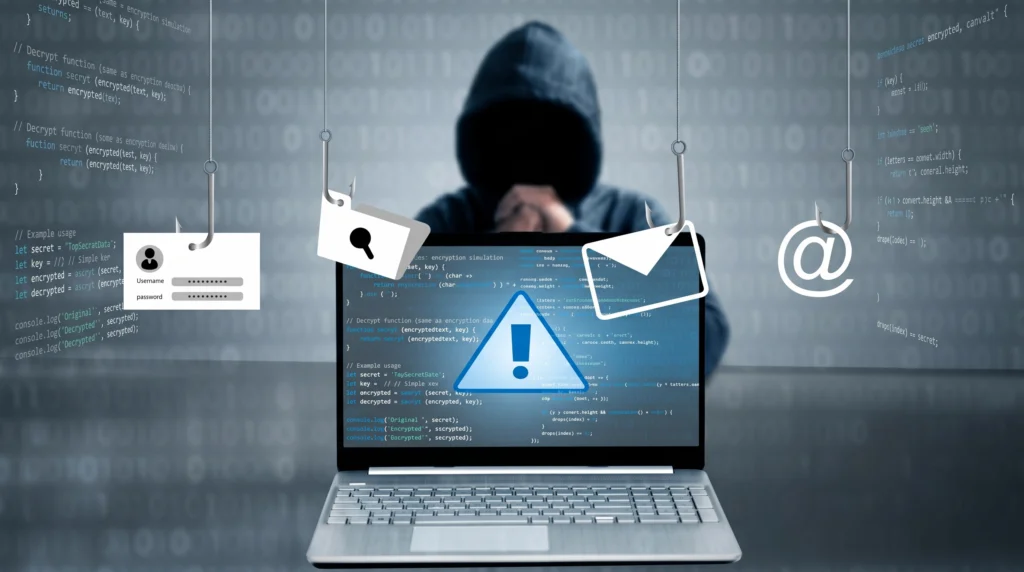
Attacks rarely announce themselves. There’s no alarm, no dramatic warning screen. They start quietly—a phishing email that looks like it came from a supplier.
One click is enough. Once inside a network, attackers can move laterally through systems, deploy ransomware to lock down files, harvest customer data, or stay hidden for weeks gathering access before making a move. By the time an IT team spots the breach, significant damage is already done.
Without proper IT infrastructure security—endpoint protection, network monitoring, and layered access controls—a business has no early warning system. Systems go down, operations stop, and the path back is expensive and slow.
What IT Security Gaps Do Most Businesses Not Know They Have?
Poor network security rarely comes from negligence. It usually comes from a lack of visibility—businesses not knowing what they’re exposed to until something goes wrong.
Common gaps include outdated firmware on networking hardware, employee-owned devices connecting to the company network without restrictions, weak or reused passwords across critical systems, and no multi-factor authentication on email, cloud tools, or remote access. Each of these sounds minor in isolation. Together, they create exactly the kind of environment attackers look for. Managed IT support services exist to find and close these gaps systematically—before a breach makes them obvious.
How Can Businesses Protect Themselves from Cyberattacks?
Getting your security baseline right doesn’t require a full infrastructure rebuild. It requires consistency around the fundamentals—and the right IT support to make sure they hold.
Enable multi-factor authentication on every system. Passwords alone don’t hold anymore. MFA adds a verification layer that stops the vast majority of credential-based attacks before they get anywhere. Every email account, cloud application, and VPN connection your team uses should have it active.
Keep systems and firmware updated without exception. Most successful cyberattacks exploit vulnerabilities that already have patches available. Updates are security fixes first, new features second. An unpatched system is an open invitation.
Train your team to spot the warning signs. The majority of breaches start with a human action—clicking a malicious link, opening a bad attachment, or entering credentials on a spoofed login page. A practical, straightforward awareness session can prevent the kind of mistake that takes months to recover from.
Back up your data—and actually test those backups. If ransomware hits, a clean and recent backup is the difference between a difficult week and a business-ending event. Backups need to be stored off-network and verified on a regular schedule. A backup you’ve never tested is one you can’t rely on when it counts.
Partner with a managed IT support provider proactively. Reactive security is always more expensive than proactive security. A managed IT support services partner who monitors your network, identifies anomalies, and maintains your infrastructure means issues get caught early—often before they cause disruption at all.
What Does Proper IT Infrastructure Security Actually Look Like?
A secure IT setup isn’t a single product or a one-time installation. It covers every layer of the network—from the firewall at the perimeter to access controls on individual user accounts to the policies governing how your team connects remotely.
At Park Infotech, we work with businesses across industries to build IT infrastructure solutions that are designed around how each organization actually operates—not based on a generic checklist. That means starting with a proper audit of your current environment, identifying where the exposure sits, and putting in place the right combination of network security hardware, endpoint protection, access management, and monitoring tools. For businesses using cloud platforms, that extends to securing Microsoft 365 environments, managing cloud access policies, and ensuring data doesn’t leave the organization unprotected.
Security is not a one-time project you complete and move on from. Threats evolve, your systems change, and your team grows. A reliable IT security partner who understands your environment and stays ahead of the threat landscape is one of the most practical long-term investments a growing business can make.
The Right Time to Act on Security Is Before You Need It
Businesses that come through cyber incidents well aren’t necessarily the ones with the biggest budgets. They’re the ones that had the right structure in place before anything went wrong—a secure network, consistent monitoring, a trained team, and a recovery plan they’d actually tested.
If your current IT setup hasn’t had a proper security review recently, that’s the right place to start. Because getting it right now costs significantly less than recovering from a breach later.
Frequently Asked Questions
What is the most common way businesses get hacked?
Phishing emails remain the most common entry point. An employee receives what looks like a legitimate message, clicks a link or opens an attachment, and unknowingly gives an attacker access to the network. Multi-factor authentication and staff awareness training are the two most effective first steps against this.
How much does a cyberattack cost a small business?
Costs vary depending on the type of attack and how quickly it’s contained. Ransomware incidents alone can run into tens of thousands in recovery costs, downtime, and reputational damage. IBM’s research puts the global average breach cost at $4.8 million—and for smaller businesses without enterprise-level recovery resources, the impact is often proportionally higher.
What is managed IT support, and why do businesses need it?
Managed IT support is an ongoing service where an external IT partner monitors, maintains, and secures your IT infrastructure on a continuous basis. Rather than waiting for something to break, a managed service provider proactively identifies risks, keeps systems updated, and responds to threats before they cause damage. For businesses without a large in-house IT team, it’s one of the most cost-effective ways to maintain a strong security posture.
How often should a business review its IT security setup?
At minimum, a formal IT security audit should happen once a year. Businesses going through rapid growth, moving to cloud services, or adding remote workers should review their setup more frequently—those transitions often introduce new vulnerabilities that need to be addressed proactively.
What’s the difference between IT security and IT infrastructure?
IT infrastructure refers to the physical and virtual systems that keep a business running—servers, networks, storage, and connected devices. IT security is the layer of protection applied to that infrastructure to prevent unauthorized access, data loss, and service disruption. Both need to work together. A fast, well-built infrastructure with weak security is still a vulnerable one.